Historical Journey
The Complete History of Troy: A Timeline of the Ancient City
From its Bronze Age origins to its archaeological rediscovery, trace the fascinating 4,000-year history of one of the world's most legendary cities.
Understanding Troy's Layers
Archaeological excavations have identified at least 10 distinct settlement layers at Troy, each representing a different phase of the city's history. These layers are numbered I through X, with sub-phases (like VIIa, VIIb) representing more specific periods. The timeline below guides you through these layers chronologically.
Timeline of Troy
3000-2300 BCE
Early Bronze Age Origins
The earliest settlements at Troy were established during the Early Bronze Age. Troy I was a small fortified village, while Troy II grew into a prosperous citadel with impressive architecture and wealth. Heinrich Schliemann's famous 'Priam's Treasure' actually dates to Troy II, about 1,000 years before the traditional date of the Trojan War.
2300-1700 BCE
Middle Bronze Age Continuity
These layers show a continuation of settlement with smaller, less wealthy communities than Troy II. The site remained occupied but experienced several rebuilding phases, possibly due to earthquakes or raids.
1700-1250 BCE
The Great Citadel
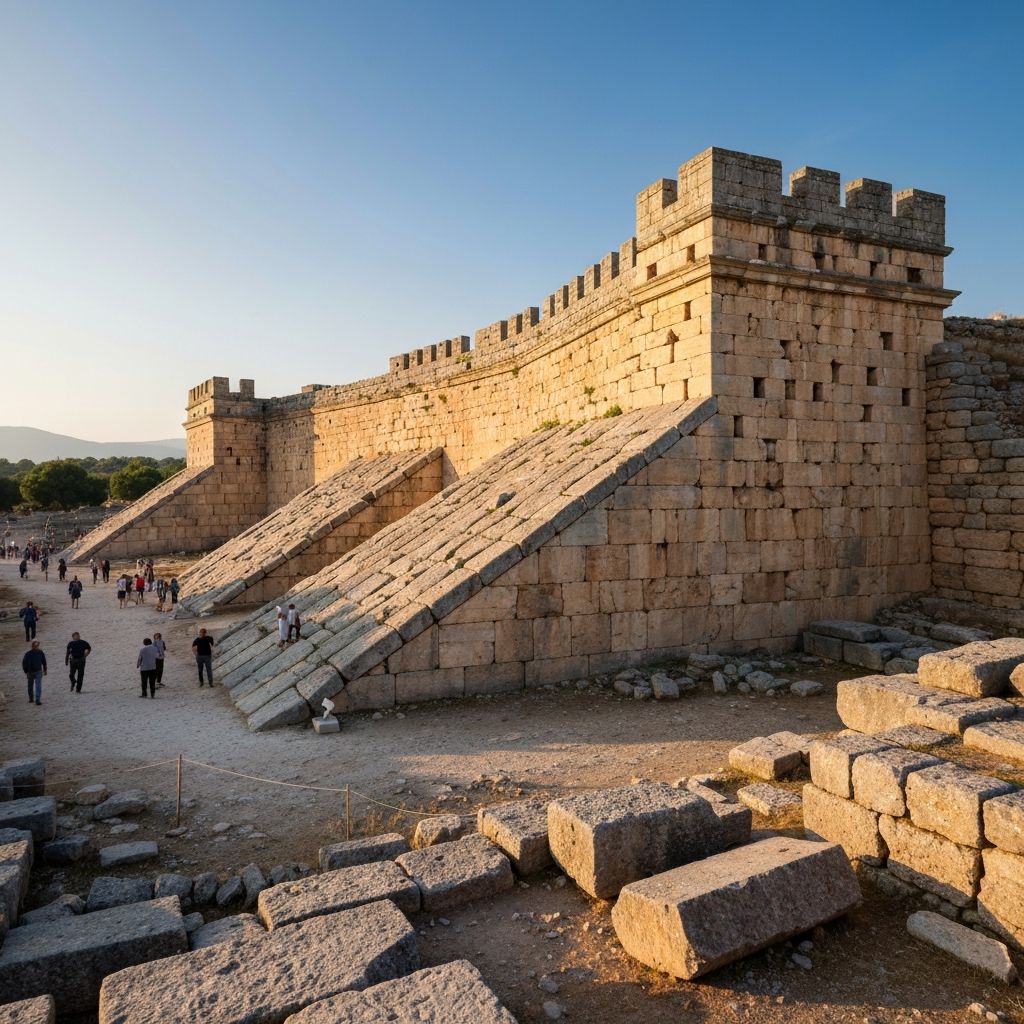
Troy VI represents the height of the city's power and prosperity. The impressive fortification walls that visitors see today largely date to this period. The city had strong connections with the Mycenaean Greek world and controlled important trade routes through the Dardanelles.
1250-1180 BCE
The Trojan War Era
Troy VIIa is the most likely candidate for the city of the Trojan War. It shows evidence of a siege mentality - with storage jars buried in floors and houses crowded against the walls. The layer ends with clear evidence of violent destruction and fire around 1180 BCE.
1180-950 BCE
Post-War Settlement
After the destruction of VIIa, the site was reoccupied by people with different cultural traditions. This period shows influence from the Balkans and represents the early Iron Age transition.
700-85 BCE
Greek Ilion
After a period of abandonment, Greeks resettled the site, building a new city called Ilion. The site became an important pilgrimage destination for Greeks who wished to honor the heroes of the Trojan War.
85 BCE-500 CE
Roman Ilium
The Romans greatly expanded the city, adding temples, theaters, and public buildings. They believed they were descendants of the Trojan hero Aeneas and lavished attention on the site. Julius Caesar and Augustus both visited and contributed to its development.
Byzantine Era
Final Settlement
During the Byzantine period, a small settlement existed at the site, eventually leading to its abandonment. The location of ancient Troy was gradually forgotten, becoming the subject of legend and speculation.
Modern Era
Schliemann's Discovery
German businessman Heinrich Schliemann began systematic excavations at Hisarlik, uncovering the remains of multiple ancient cities. Though his methods were destructive by modern standards, he established the site as the location of Homer's Troy.
Key Archaeological Finds
Significant discoveries that have shaped our understanding of Troy
Priam's Treasure
Found 1873A cache of gold jewelry and vessels found by Schliemann. Now dated to Troy II (c. 2400 BCE), not the Trojan War period.
Location: Currently in Pushkin Museum, Moscow
Troy VI Walls
1700-1250 BCEImpressive limestone fortification walls with sloping surfaces, among the best-preserved Bronze Age fortifications in the Aegean.
Location: Visible on site
Bronze Arrowheads
Troy VIIaMycenaean-style bronze arrowheads found in destruction layers, suggesting conflict with Greek attackers.
Location: Troy Museum
Ceramic Collections
All periodsThousands of pottery sherds documenting cultural connections and trade networks across millennia.
Location: Troy Museum
The Trojan War: Myth and Reality
The Mythological Account
According to Homer's Iliad, the Trojan War was sparked when Paris, prince of Troy, abducted Helen, wife of Menelaus of Sparta. A coalition of Greek kingdoms besieged Troy for ten years. The war ended with the stratagem of the Trojan Horse, after which the Greeks sacked and burned the city.
The Iliad focuses on a brief period during the final year of the war, centering on the conflict between Achilles and Agamemnon. The story of the Trojan Horse comes from other sources, including Virgil's Aeneid.
The Archaeological Evidence
Troy VIIa, dating to around 1180 BCE, shows clear evidence of violent destruction. Archaeologists have found:
- Evidence of intense fire throughout the settlement
- Human remains in streets and buildings
- Mycenaean-style bronze arrowheads
- Storage vessels buried in floors (suggesting siege conditions)
While we cannot prove the Iliad's specific story, the archaeological evidence does suggest that a prosperous Late Bronze Age city at Troy was destroyed by warfare around the traditional date of the Trojan War.
Walk Through History at Troy
Experience this incredible timeline firsthand. Plan your visit to the archaeological site and Troy Museum.