Complete Guide
Troy Ancient City: Unveiling the Legendary History and Modern-Day Location
Discover everything about Troy, one of the most famous archaeological sites in the world. From its legendary past to practical visitor information.
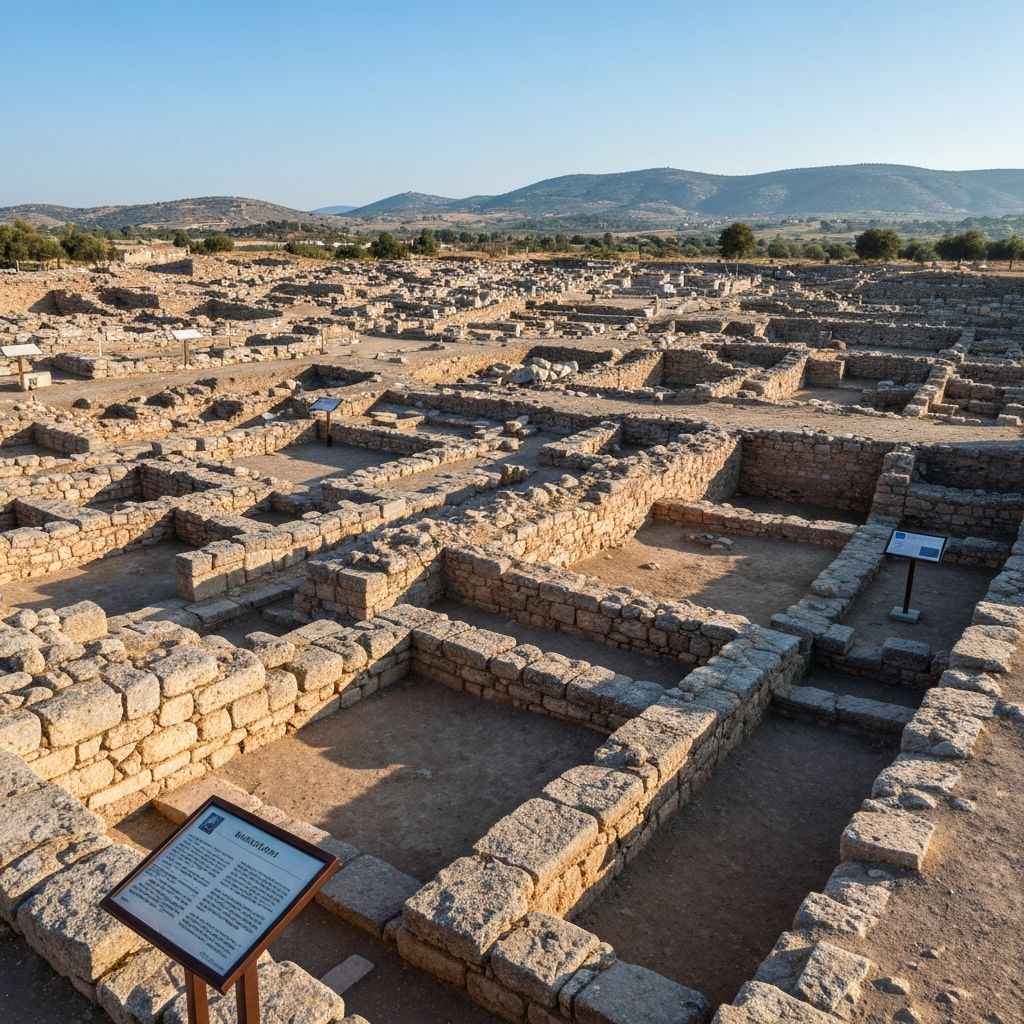
What is Troy Ancient City?
The Legend and Reality of Troia
Troy, also known as Ilion or Ilium in antiquity and Troia in Turkish, is an ancient city located in what is now northwestern Turkey. It is perhaps best known as the setting of the Trojan War described in Homer's epic poem, the Iliad. The site, situated at Hisarlik near the Dardanelles strait, has been inhabited for over 4,000 years.
What makes Troy extraordinary is not just its legendary status but its archaeological reality. Excavations have revealed that the site contains the remains of at least ten distinct cities, each built upon the ruins of its predecessor, spanning from the Early Bronze Age (around 3000 BCE) to the Byzantine period.
Key Periods of Troy's History
Troy I-V
Early Bronze Age (3000-1700 BCE)
Troy VI-VIIa
Late Bronze Age - Possible Trojan War Era
Troy VIII-IX
Greek and Roman Periods
Troy X
Byzantine Period
Where is Troy Ancient City Located Today?
Troy's Location in Turkey: Canakkale Province
The ancient city of Troy is located at Hisarlik, in the Canakkale Province of northwestern Turkey. The site sits approximately 30 kilometers (19 miles) southwest of the city of Canakkale and about 6 kilometers from the Aegean coast. Its strategic position near the Dardanelles (ancient Hellespont) made it a vital commercial and military center in antiquity.
The Significance of Hisarlik
The name "Hisarlik" means "place of fortresses" in Turkish, aptly describing the mound that contains the accumulated remains of successive ancient settlements. This archaeological tell (artificial mound) rises about 30 meters above the surrounding plain, offering commanding views of the Trojan Plain and the approaches from the sea.
Archaeological Discoveries and Excavations
Heinrich Schliemann's Role
The modern discovery of Troy is largely attributed to German businessman and amateur archaeologist Heinrich Schliemann. Beginning in 1870, Schliemann conducted extensive excavations at Hisarlik, firmly establishing the site as the location of ancient Troy. His most famous discovery was a cache of gold artifacts he called "Priam's Treasure," though it was later dated to a period much earlier than the Trojan War.
Layers of Civilization at Troy
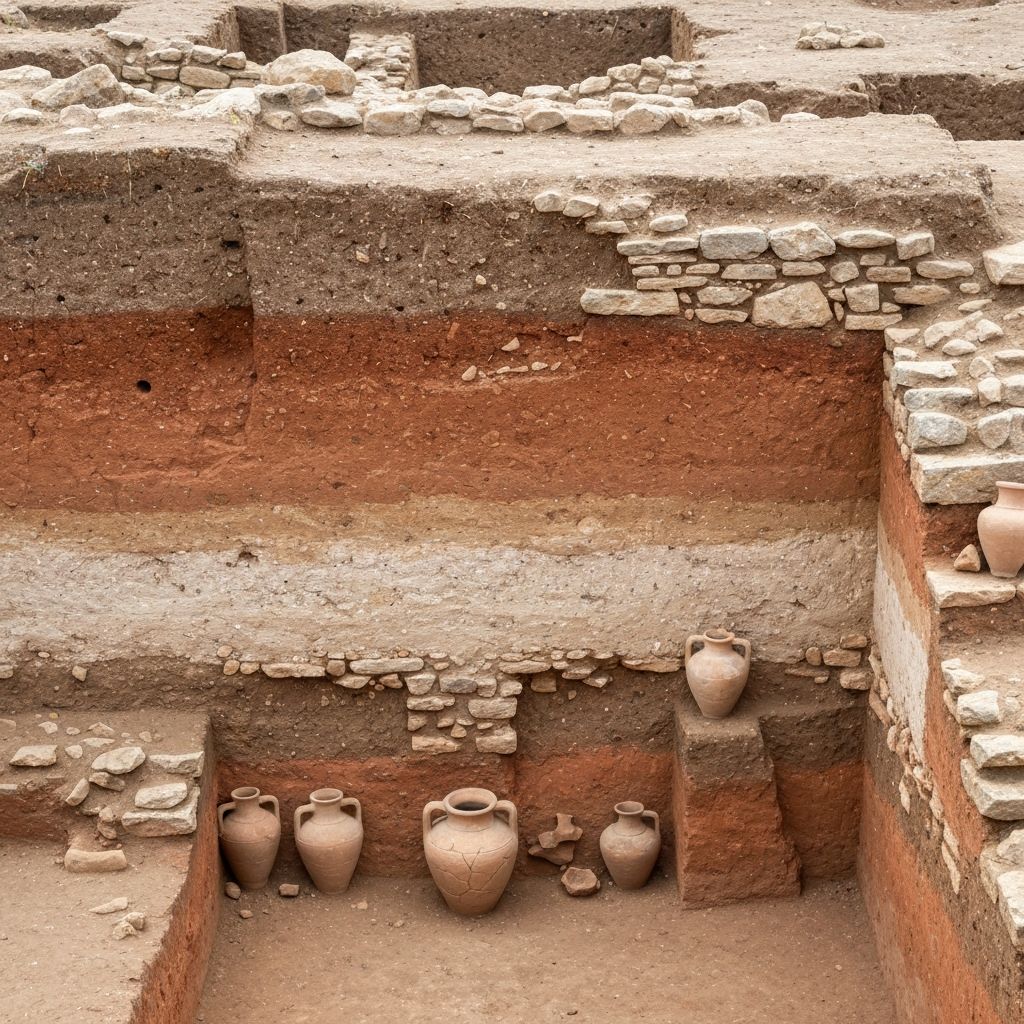
Archaeological work at Troy has revealed the remarkable stratigraphy of the site. Each layer represents a distinct period of habitation, with unique architectural features, artifacts, and historical contexts. The most significant layers for understanding the legendary Trojan War are Troy VI and Troy VIIa, dated to the Late Bronze Age.
Was Ancient Troy a Real City?
"Troy was certainly a real city, and archaeological evidence confirms it was destroyed multiple times throughout its history. Whether the specific events of Homer's Iliad occurred as described remains a subject of scholarly debate."
Evidence Supporting Homer's Iliad
While the Iliad is a work of epic poetry that blends myth with possible historical memory, archaeological evidence does support the existence of a wealthy, fortified city at Hisarlik during the Late Bronze Age. Troy VI shows evidence of impressive fortifications and prosperous trade, while Troy VIIa shows signs of destruction by fire and warfare around 1180 BCE - a date that aligns with traditional estimates for the Trojan War.
Myths vs. Historical Records
It's important to distinguish between the literary Troy of Homer and the archaeological Troy of Hisarlik. While the physical city certainly existed, characters like Achilles, Hector, and Helen, and events like the Trojan Horse, belong to the realm of mythology. However, the Iliad likely preserves memories of real Bronze Age conflicts between Mycenaean Greeks and the peoples of western Anatolia.
Why Was Ancient Troy Destroyed?
The Trojan War: Mythological Accounts
According to Greek mythology, the Trojan War was sparked when Paris, a prince of Troy, abducted Helen, the wife of Menelaus, King of Sparta. This led to a coalition of Greek kingdoms besieging Troy for ten years. The war ended with the famous stratagem of the Trojan Horse, after which the Greeks sacked and burned the city.
Archaeological Clues to Destruction
Archaeological evidence shows that Troy was destroyed multiple times throughout its history. Troy VIIa, in particular, shows clear signs of violent destruction including:
- Evidence of intense fire and burning throughout the settlement
- Human remains scattered in streets and buildings
- Bronze arrowheads of a type used by Mycenaean Greeks
- Storage vessels hurriedly buried in floors, suggesting siege conditions
Troy Ancient City: Modern Name and Identity
Hisarlik: The Present-Day Site
Today, the archaeological site of Troy is officially known as Hisarlik. It was added to the UNESCO World Heritage List in 1998, recognized for its outstanding universal value as the setting of Homer's Iliad and for its extensive archaeological record spanning over four millennia.
Is Troy Greek or Turkish?
This question reflects modern political boundaries onto ancient history. In antiquity, Troy was an Anatolian city with cultural connections to both the Aegean world and the civilizations of the Near East. Today, the site is located in the Republic of Turkey and is an important part of Turkish cultural heritage, while also being celebrated globally as part of the classical Greek literary tradition.
Planning Your Visit to Troy Ancient City
Getting There: Canakkale and Beyond
Most visitors to Troy base themselves in Canakkale, a charming city on the Dardanelles strait. From Canakkale, Troy is easily accessible by minibus (dolmus), taxi, or as part of an organized tour. The journey takes approximately 30 minutes.
What to See at the Ruins of Troy
The Trojan Horse
A large wooden replica near the entrance
City Walls
Remains from various periods, especially Troy VI
The Odeon
Roman-era theater and council building
Troy Museum
Modern museum with artifacts and exhibits
Frequently Asked Questions about Ancient Troy
Does the ancient city of Troy still exist?
Yes, the ruins of Troy still exist at Hisarlik in Turkey. While the city is no longer inhabited, extensive archaeological remains can be visited, including fortification walls, temples, houses, and a Roman theater.
What is the ancient city of Troy called today?
The archaeological site is known as Hisarlik in Turkish, while the ancient city is referred to as Troy (English), Troia (Turkish/Italian), or Troja (German). The nearby village is called Tevfikiye.
When was Troy discovered?
The site of Hisarlik was first identified as a possible location for Troy by Charles Maclaren in 1822. Frank Calvert began excavations in the 1860s, but it was Heinrich Schliemann's extensive excavations from 1870 onwards that firmly established Hisarlik as ancient Troy.
Have more questions?
Visit our comprehensive FAQ page for answers to all your questions about Troy Ancient City.
View All FAQs